

A dinner invitation, a gift for new hires, a monkey that changed its name: the rarest Beanie Babies tend to come with oddly specific stories. Some were handed to a few dozen people and never sold at all. Others sat on ordinary shop shelves, but only for a short while, and only with a design or a tag that collectors now go out of their way to find.
Which Beanie Babies are the rarest?
The hardest to find are mostly bears that were never for sale: Chef Robuchon, Mitya, and the two special Princess editions. Just behind them sit early retail versions that everyone recognizes, royal blue Peanut and wingless Quackers among them, which are scarce because the design changed early. The version is what counts. One character can have a common release and a nearly unobtainable one.
This guide groups the rarities four ways: rare retail versions, exclusives that skipped the shops, regional tags, and prototypes. It does not rank them. A reported production run, the number that survive, and how often one comes up for sale are three different measures, and they rarely agree. Where a figure is a collector estimate rather than a documented edition size, we say so.
Rare versions of familiar Beanie Babies
Every character in this section was sold in shops. The versions below are simply the ones that were on sale briefly, before a change in design or tag. You will see tag generations mentioned throughout: those are the successive designs Ty used for the heart-shaped paper hang tag and the sewn-in fabric tush tag.
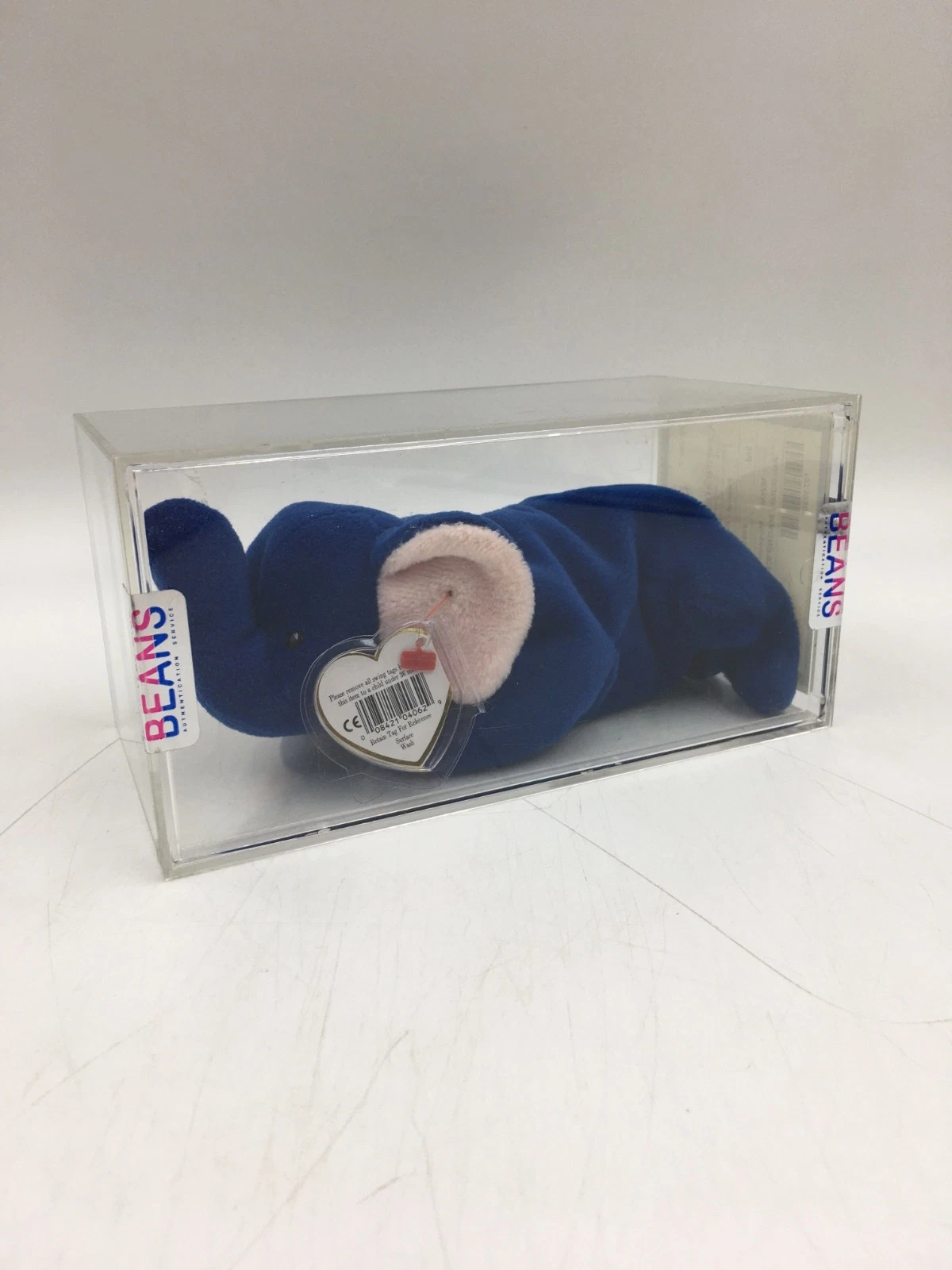
Royal blue Peanut
The first Peanut was royal blue, a shade noticeably darker than the light blue elephant that replaced it. Of all the early color changes, this is the one most collectors know by name, and the original is still the one they want.

Royal blue turns up on other Ty products too, including the larger Beanie Buddy and the McDonald’s Teenie, and neither is the rare one. The original Beanie Baby carries a third-generation hang tag and a first-generation tush tag. Check the product line and the tags, not just the color.
Wingless Quackers
The first Quackers had no wings. Ty added them soon after, so the wingless duck is the earliest form of a character everyone knows, and the change is obvious from across the room.
The early duck was sold under two names, Quacker and Quackers, and the name on the tag helps place an example. One caution: a later duck with its wings removed is a damaged duck, not an early one. The tag combination is what separates the two.
Blackie with a mint first-generation hang tag
Blackie was in production for years, so the bear itself is easy to find. A mint Blackie still wearing its first-generation hang tag is another matter, and because the later bears look identical, the rare one is easy to walk past.

That first paper tag is a single heart rather than the folded booklet that came later. The tag has to be present, and both the tag and the bear have to have escaped the handling that takes a toy out of mint condition. Thirty years on, that combination is hard to come by.
One thing that does not help: the 1993 copyright date. It appears on later Blackies as well, so it says nothing about when a particular bear was made.
Explore Blackie with a mint first-generation hang tag
Fine-mane Mystic with a mint first-generation hang tag
Mystic with a fine mane, a tan horn and a mint first-generation hang tag is one of the hardest early retail Beanie Babies to find. Each part of that description matters, because Mystic went through more changes than almost any other character.
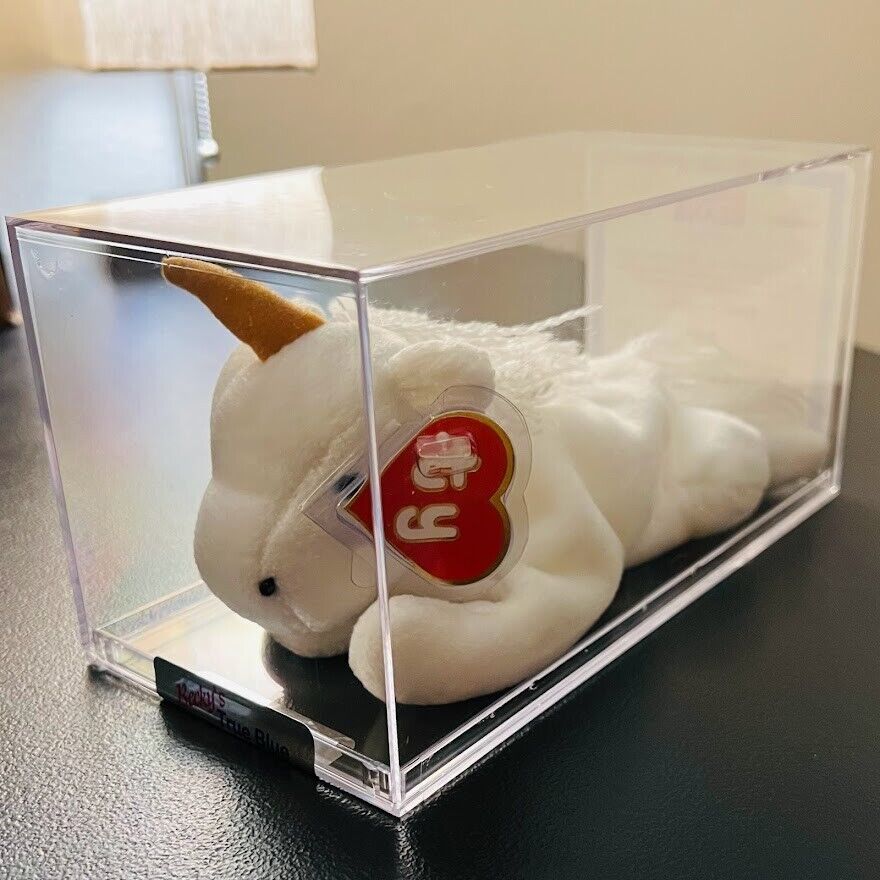
Later unicorns had coarse manes, iridescent horns and other differences, so the name alone tells you very little about which Mystic you are looking at.
The rarity lies in two things surviving together: the early design and its original tag in mint condition. A fine-mane Mystic with a later tag is a different collectible, even though the unicorn looks much the same.
Explore Fine-mane Mystic with a mint first-generation hang tag
Nana without a Bongo correction sticker
Bongo started life as Nana, and the name change was handled on the tag. Some early hang tags had the new name applied over the old one on a correction sticker. Others were never stickered and still read Nana. Those are the ones collectors are after.
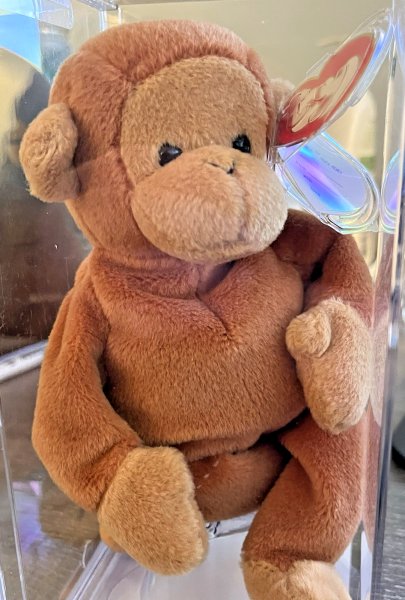
The tag is the whole story here. The monkey’s body is the same either way, so without the paper heart there is no way to show that a Bongo was ever sold as Nana.
A sticker that has been peeled off muddies things further. A tag that was never stickered and a tag with its sticker removed are not the same thing, so look closely at the paper around the printed name.
Explore Nana without a Bongo correction sticker
Fine-mane Derby
Derby’s early fine mane is easy to miss beside the coarse-mane horse that followed, and the tags will not always help: both versions are documented with third-generation hang tags and first-generation tush tags.

The difference is in the horse. Later releases added a forehead star and, later still, a fluffy mane, so Derby exists in several forms beyond the one most people remember.
The fine-mane version is the hard one to find. It is also a useful reminder that tag generations do not account for every variation. Sometimes the detail that matters is in the plush itself.
Valentino with a mint second-generation hang tag
Valentino was made for so long that its early version is easy to overlook. A mint example with a second-generation hang tag looks much like the white bear with the red heart that stayed in production for years afterward, and it is far harder to find.

The second-generation tag opens like a small book and uses the earlier thin “ty” lettering. The challenge is finding that tag clean and still attached to a bear in the same condition.
The brown nose is a red herring. What makes this Valentino rare is the early tag and the condition.
Beanies you couldn’t buy in the usual shops
Ty also made Beanies that never went on sale: gifts for employees, promotional pieces, and bears handed to guests at particular events. Some were made in tiny numbers, and the story of who received them and why is a large part of their appeal.
M.C. Beanie’s rare nose variants
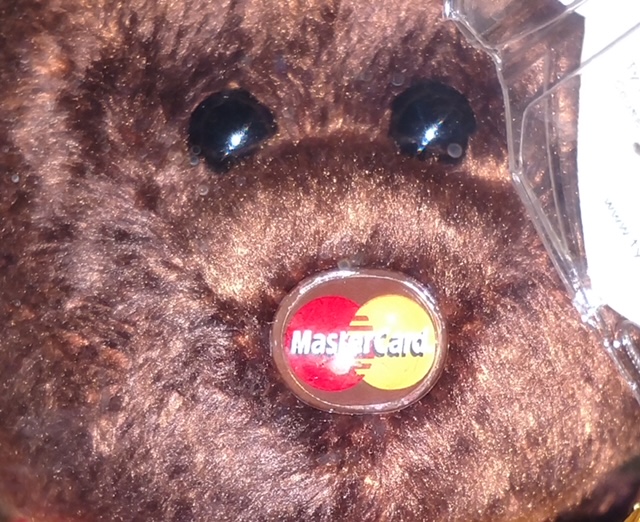
M.C. Beanie’s rare versions differ only at the nose, sometimes so slightly that they pass for the common bear. There are solid black and solid brown noses, and Mastercard emblems on two different shades of brown.

Solid black
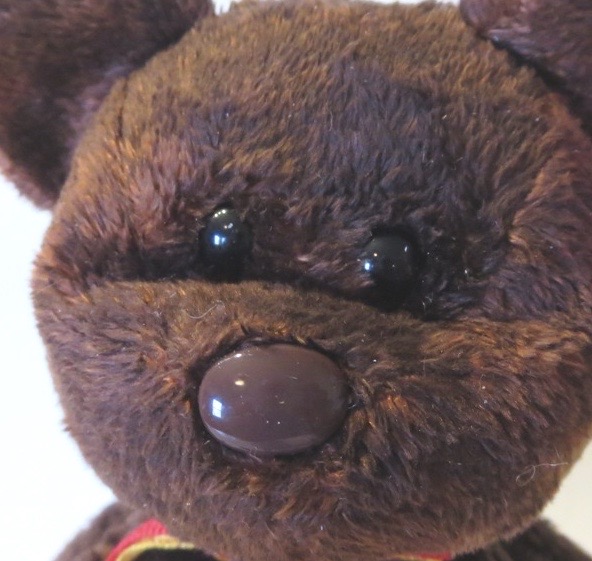
Solid brown

Light-brown emblem
Dark-brown emblem
The dark-brown emblem sits on a chocolate background that is easily mistaken for black. The light-brown emblem is closer to honey. Older authentication labels often say “brown nose” for either, which misses a distinction collectors now draw.
The reported counts are three solid-black-nose bears, three solid-brown-nose bears, six with the light-brown emblem and twelve with the dark-brown emblem. These are collector figures, not production records. All refer to the full-size bear and not the miniature M.C. Beanie keychain.
M.C. Beanie (solid black nose) · M.C. Beanie (solid brown nose) · M.C. Beanie (light-brown emblem nose) · M.C. Beanie (dark-brown emblem nose)
Lucky Erin
Lucky Erin was a gift for new Ty employees who had joined too late to receive a #1 Bear. A brown nose, a white ribbon and a signed hang tag set it apart from the green Erin sold in shops.
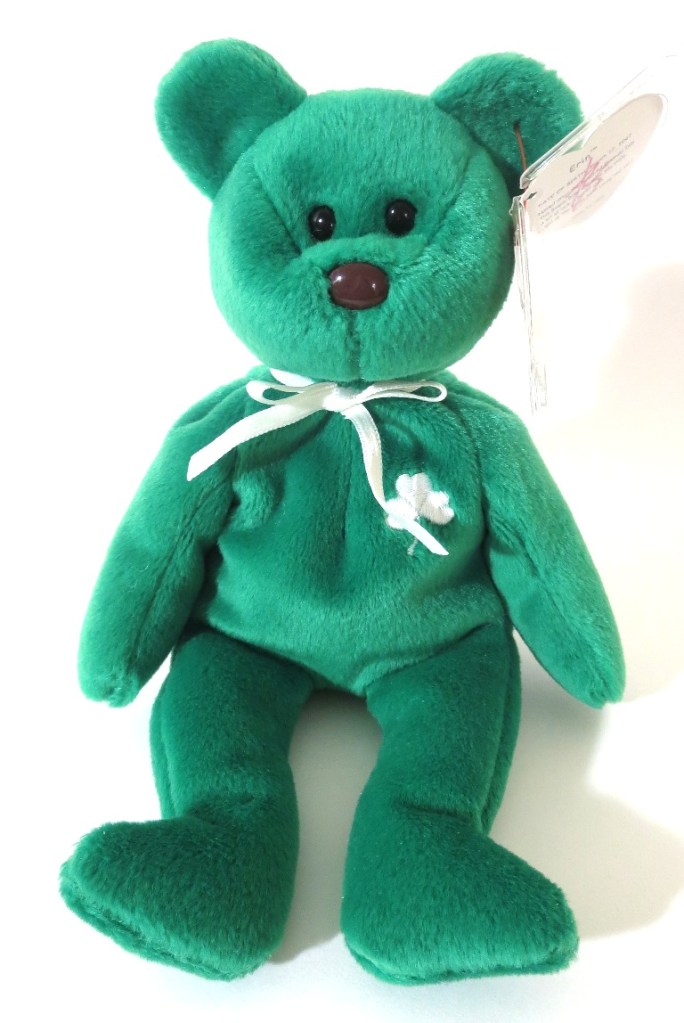
Both bears were employee gifts, but they went to different groups, and Lucky Erin was never something a collector could order alongside the retail bear.
It is among the hardest employee Beanies to find. No reliable production total has been published, so treat any exact number with caution.
#1 Bear
Ty made 253 #1 Bears for its sales representatives in 1998, and each one is numbered. Ty Warner signed the hang tags, which carry a handwritten sequence number beside the printed edition total.
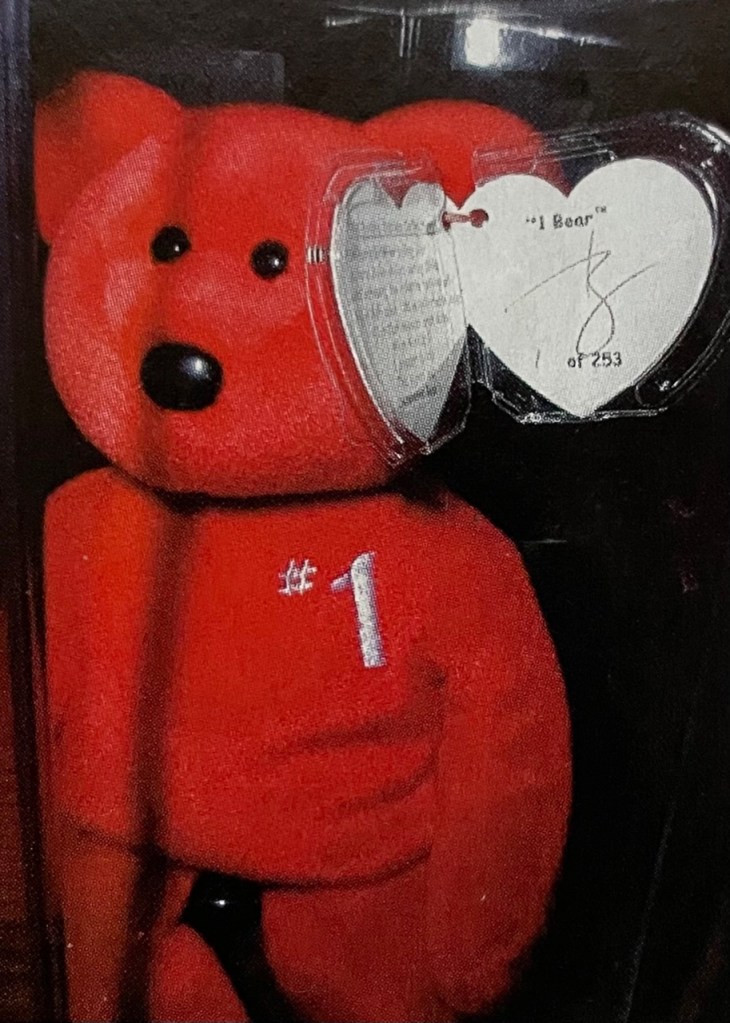
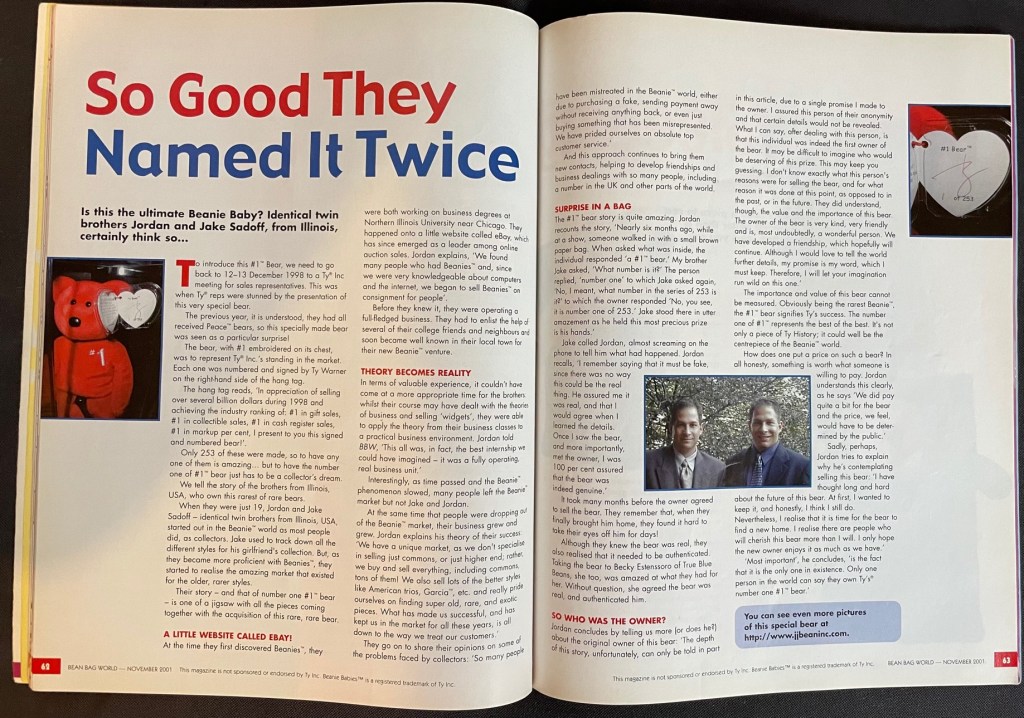
That gives #1 Bear something most rarities lack: a documented quantity, and a way to place any single bear within it. The tag is as much a part of the piece as the bear.
Counterfeits exist, so an authenticated example with its original signed and numbered tag is the one to look for. A loose bear has lost its connection to the edition.
Chef Robuchon
Chef Robuchon came with a dinner invitation. In 2006, before L’Atelier opened at the Four Seasons Hotel in New York, journalists, chefs and selected guests each received the bear and a red card inviting them to a private event.
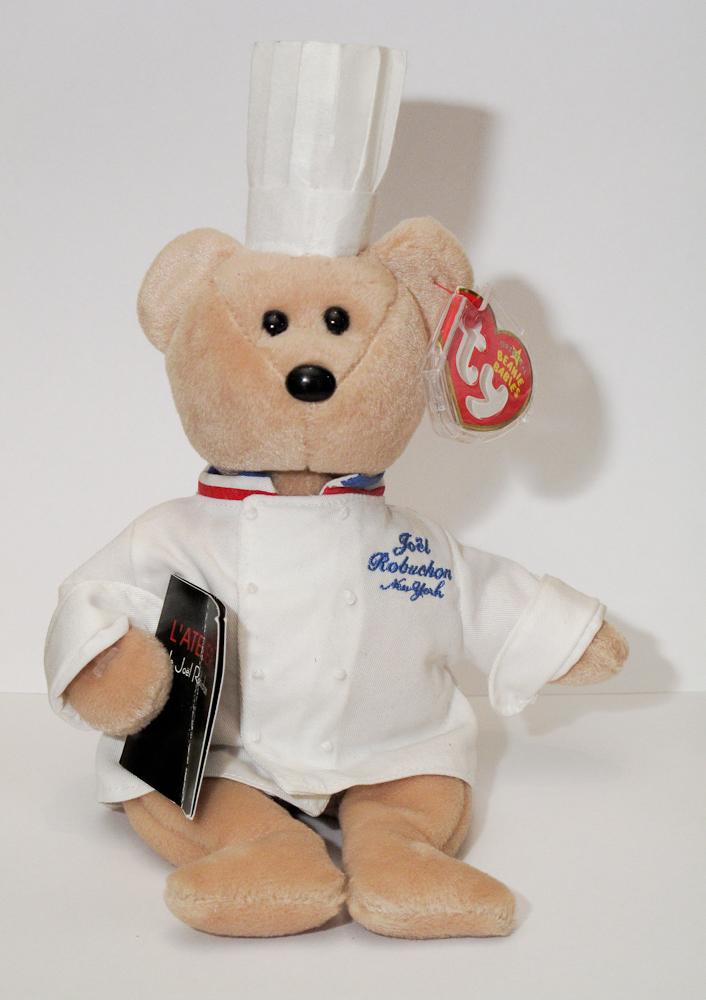
The bear holds a menu printed with Joël Robuchon’s recipe for potato purée. As restaurant memorabilia goes it is remarkably specific, and a complete example with the original invitation is worth more to collectors than the bear alone.
About 200 are thought to have been made. Ty never published a total, and none were ever sold in shops.
Mitya
Mitya was given to selected attendees at the 2017 Moscow Children’s Toy Fair. Fewer than 50 are believed to exist, though that figure is an estimate.

This red bear arrived long after the Beanie boom, and its rarity has nothing to do with early tags or a short-lived design. It was made for a small audience at one event, and that is the whole reason so few exist.
That puts Mitya among the notable later exclusives, even though it is far less familiar than the Beanies that made headlines in the 1990s.
Hong Kong Toy Fair 2010 bear
The tag inside the 2010 Hong Kong Toy Fair bear thanks its recipient for attending Ty’s exclusive showing in the Peninsula Suite at the Peninsula Hotel. The wording ties the red bear to one event in one year.


It is among the harder event bears to find, and no reliable production total has been published. Ty made bears for later Hong Kong Toy Fairs too, so the year is part of the identification.
The seventeenth-generation hang tag and fifteenth-generation tush tag fit a 2010 release. Like Mitya, this bear is rare because of how few people received it, and not because of its age.
Clubby with a 00 tush tag
Clubby’s rare version is easy to miss. The original blue club bear carries a tush-tag number from 00 through 03, and the scarce 00 is associated with early promotional distribution.
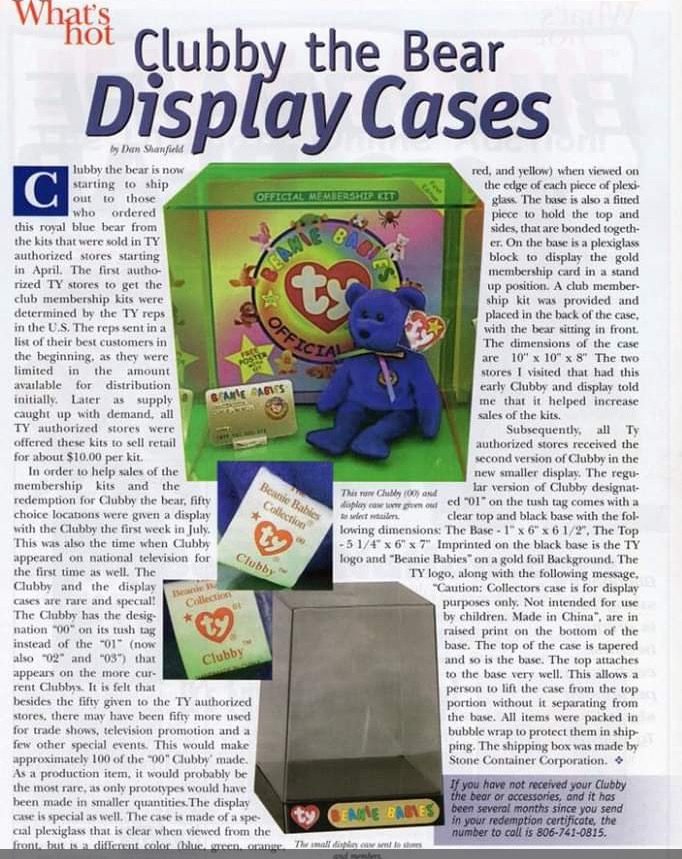

Anyone who remembers the Beanie Babies Official Club and its membership kits will recognize the bear. The only difference is the small number on the sewn-in label. Estimates of 50 to 100 examples circulate, but none has been confirmed.
Some accounts pair the early promotional bears with a larger display case. That has not been established for every 00 example, and neither the kit nor the case identifies the version on its own.
The Princess bears most people never saw
Princess is one of the best-known Beanie Babies ever made, and these two editions are something else entirely. Neither was sold to the public. Their rarity comes from who received them and the occasion.
Crystal-nose Princess
Three crystal-nose Princess bears are reported to have been made as gifts for trustees connected with the Diana memorial fundraising effort.
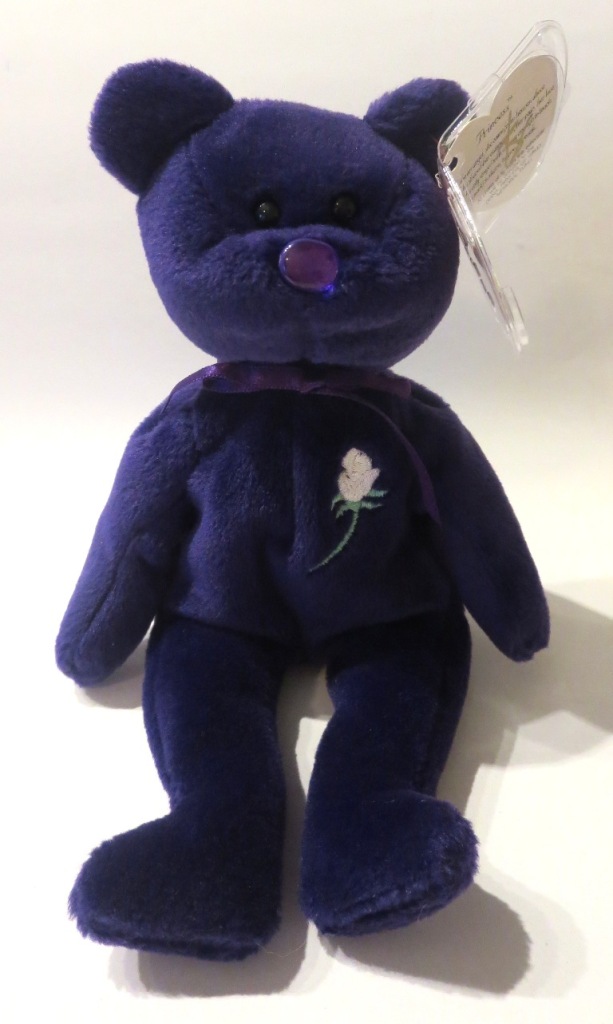
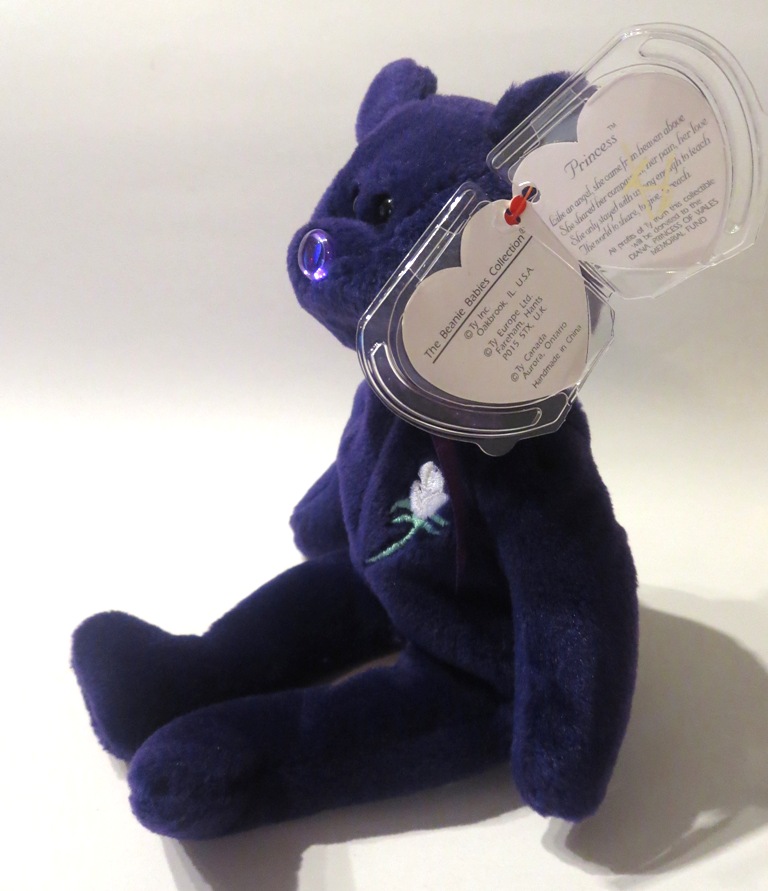
The nose is the visible difference, but it cannot carry the identification alone, because a retail bear with an altered nose would look the same. The presentation history has to come with it.
The familiar Princess variations, PVC pellets, country of manufacture and poem spacing, belong to the retail bear and say nothing about this edition.
Princess (crystal-nose trustee edition)
Numbered Memorial Fund Princess
An edition of 24 signed and numbered Memorial Fund Princess bears was reportedly prepared for a 1997 charity auction at Kensington Palace. Each came with a certificate tying it to the release.
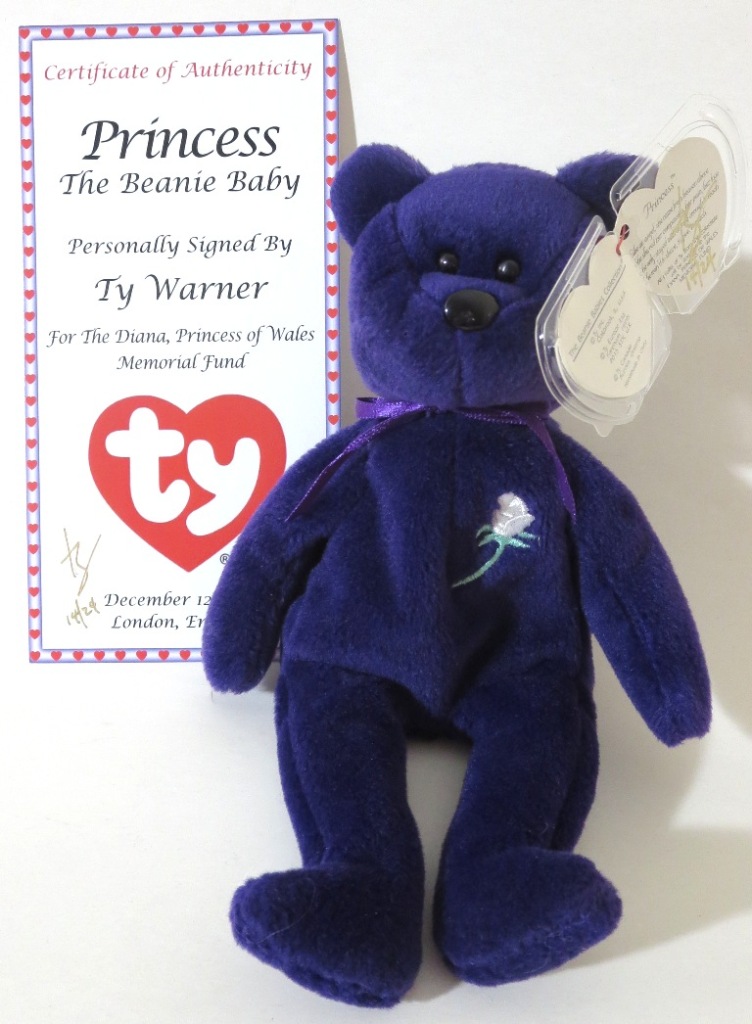
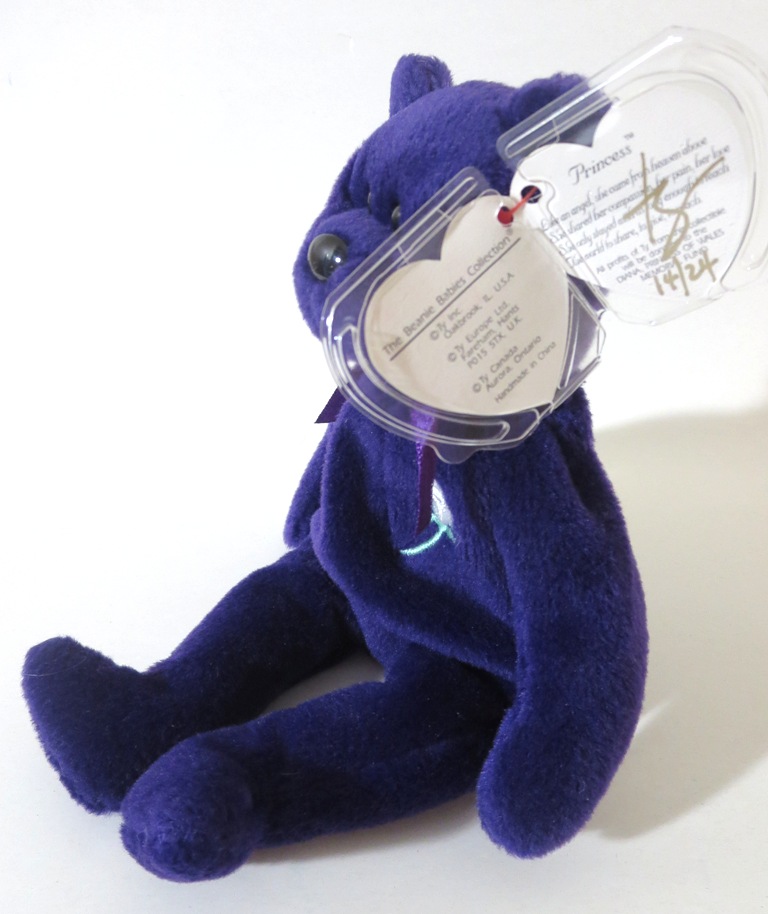
Bear and paperwork together make the edition. A signature added to an ordinary Princess later on does not turn it into one of the auction bears.
These are also separate from the crystal-nose trustee gifts. Both editions grew out of the memorial fundraising, but they have different histories and different reported quantities.
Princess (numbered Memorial Fund edition)
Rare regional tags
Regional tags add another layer to early Beanie collecting. The plush is often one you already own; the tags are what connect it to a much smaller release. The four categories below cut across characters rather than describing particular animals.
Pre-first-generation UK tags
The earliest UK tag format is found on early examples of the Original Nine, Spot among them. It is a different thing from the later first-generation tags that carry a UK sticker. A collector can own several Spots and still be looking for this one.
Canadian embroidered tush tags
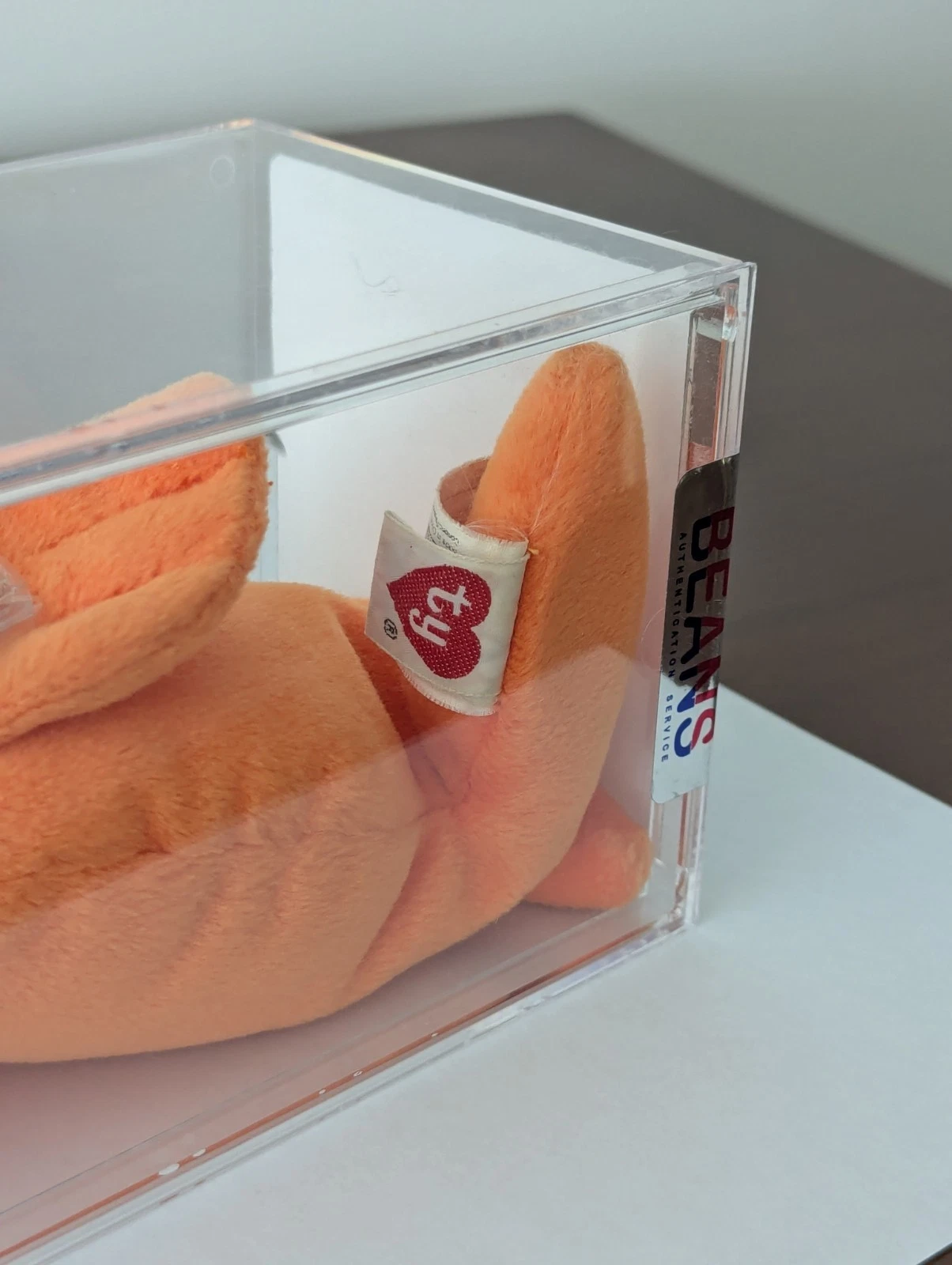
Some early Canadian Beanies have an embroidered tush tag of the kind Ty used on its plush line, and that tag is the whole attraction. A printed tush tag with a Canadian label is a different combination, which is why “Canadian Beanie” is too loose a description.
Second-generation German/Korean combinations
A second-generation German hang tag on a Beanie Baby made in Korea is a scarce regional combination. The tags record two different facts: Korea is where the toy was made, and Germany is the market it was prepared for.

Third-generation German tags
The scarce third-generation German hang tag has italic text on its right inside panel, and that panel is how to tell it from the other formats. It appears on several characters, which gives tag collectors another way into animals they already know.


Prototypes: Beanie Babies that never reached the shops
Some of the strangest Beanie Babies are samples Ty made while working out a character’s design. Collectors have documented familiar animals in colors that never reached production, from Chocolate with green antlers to a tie-dyed Peanut. They show the roads Ty did not take, and some are a long way from the Beanies most of us remember.
Chocolate with green antlers
The green-antler Chocolate prototype documented by RarestBeans keeps the moose’s usual brown body and swaps the antler color for green, a shade more usually seen on Legs the Frog. It is a small change with a striking result, and proof that even the Original Nine went through experiments before they settled into the designs collectors know.

Tie-dyed Peanut
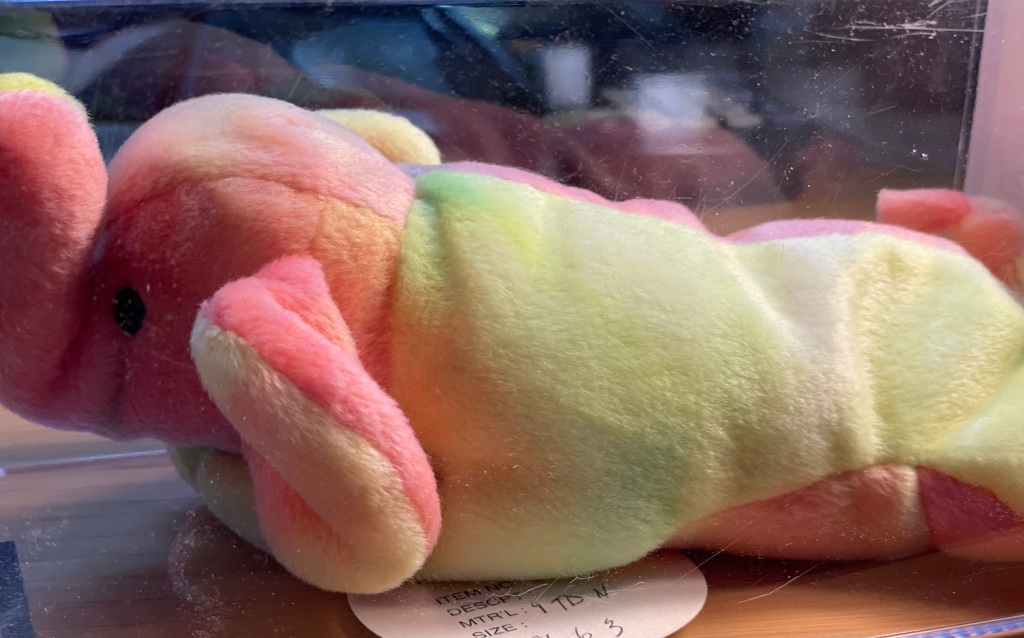
Royal blue and light blue are only part of Peanut’s story. A Peanut prototype documented by RarestBeans is covered in bright pastel tie-dye and still has its sample tags. The collector account traces its first appearance to 2004, followed by nearly two decades with one owner, which goes some way to explaining how a prototype can be well known and yet almost never for sale.
Tan-and-pink Inky
Inky was sold in both tan and pink. The tan-and-pink Inky prototype documented by RarestBeans combines the two colors and has a mouth, and its sample tag is dated January 18, 1994. That is earlier than the first retail Inky, which had no mouth, so Ty was trying out features well before shoppers saw them.

Prototypes belong in any discussion of the rarest Beanie Babies, but ranking them is guesswork. One documented example does not mean only one was made. Original sample tags, records linking a piece to Ty, and a clear ownership history are what establish a prototype; an unusual color by itself is not enough. For collectors who know the regular releases well, the draw is seeing a familiar character in a form that was never on any shop shelf.
Common questions about rare Beanie Babies
Are the rarest Beanie Babies always the most valuable?
Not always. A Beanie Baby can be very hard to find and still not be the one collectors pay the most for. Familiar favorites such as royal blue Peanut draw more interest than an obscure release, even when fewer of the obscure one exist.
Condition counts too. Damage, missing tags or doubts about authenticity all lower what buyers will pay. Rarity feeds into value, but it does not set the price by itself.
Does a 1993 copyright date mean a Beanie Baby is rare?
No. The copyright date does not tell you when a particular toy was made, and early dates appear on plenty of common later releases. Identify the design and the tag combination instead. Our Beanie Baby tag identification guide explains the differences.
There’s more to Beanie collecting than the familiar names
The rarest Beanie Babies come from every corner of Ty’s history: early designs like royal blue Peanut and wingless Quackers, bears made for employees and events, and prototypes that never reached the shops. Some are different at a glance. Others only give themselves away on the tags, which is a good reason to look again at characters you thought you knew.
If this has you wondering about your own collection, pick a favorite and look into its releases. Our Beanie Baby tag identification guide will help you work out which version you have. It will probably be the common one. Now and then it is not, and knowing where your bear sits in that history is the place to start.