
A Beanie Baby’s two tags tell different parts of its story. The paper heart is the swing tag, also called a hang tag. The fabric label sewn into the toy is the tush tag. Looking at both gives you a better starting point than reading either one alone.
Collectors group tag designs into generations. This guide shows the visual changes to compare, explains why the two generation numbers may differ, and helps you record the details on your own toy.
Swing tag versus tush tag
The swing tag is the removable paper tag attached with a plastic fastener. Depending on its generation, it may contain the character's name, style number, birthday, poem, care language and company information. Its condition can matter greatly to collectors because it is easily bent, creased, written on or lost.
The tush tag is permanently sewn into the plush. Later versions commonly include the Ty logo, product name, manufacturing country, care instructions, pellet material and other legal information. Early tush tags can contain much less information, so a missing name is not automatically suspicious.
Swing tag generations at a glance
Dates are approximate production windows for US tags. UK and EU tags follow their own sequence, so a British tag will not always match this chart.
| Generation | When | How to spot it |
|---|---|---|
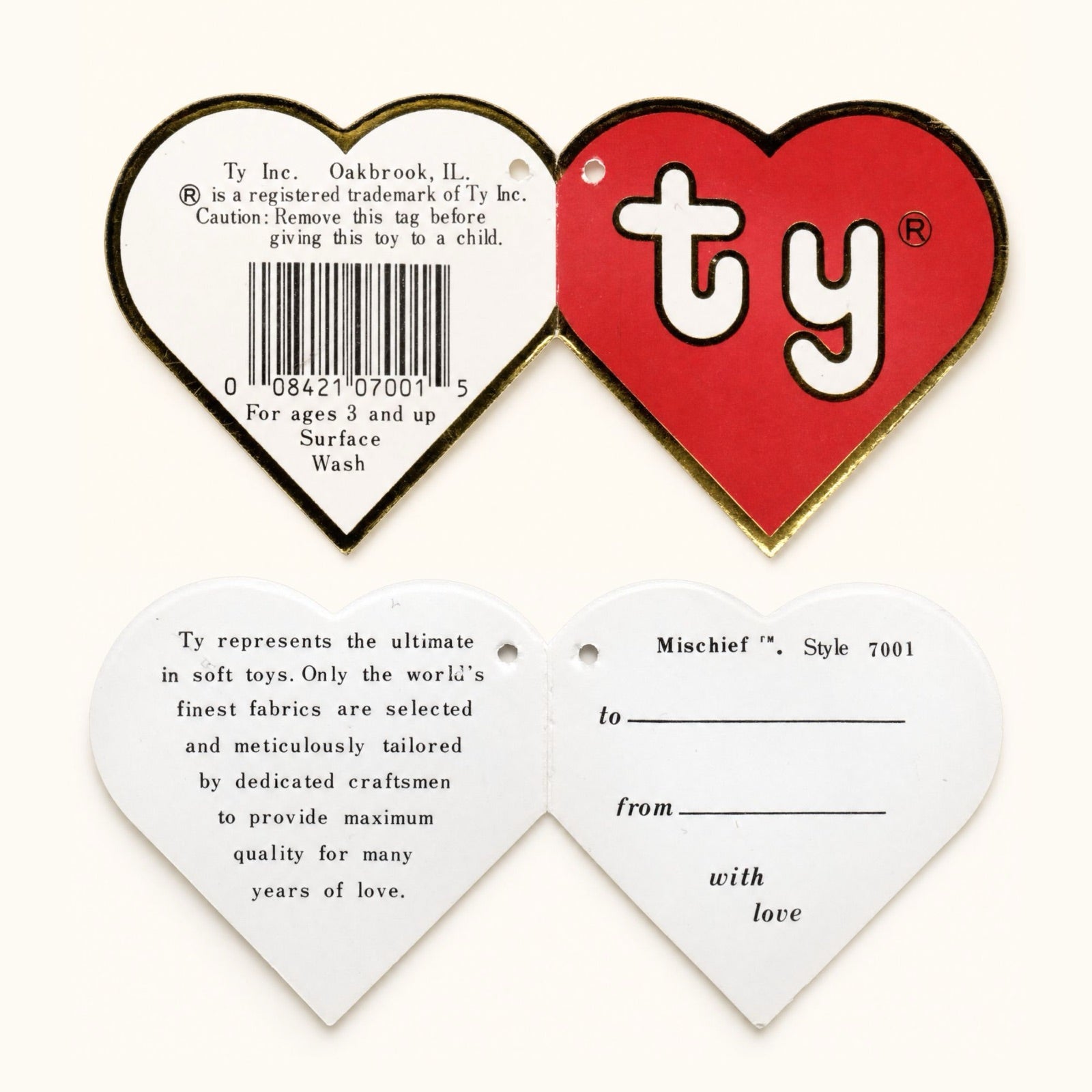
| 1st | 1993 to spring 1994 | Thin, skinny "ty" in white on the red heart, no star. The only generation that does not open like a book. The character's name and style number are printed on the back. |
| 2nd | Spring 1994 to spring 1995 | Same skinny "ty" front, still no star. The first generation to open like a book, with a To/From gift section inside. |
| 3rd | Spring 1995 to spring 1996 | The fat, bubbly "ty" lettering arrives. Opens like a book and still has no star. |
| 4th | Spring 1996 to late 1997 | The yellow "Original Beanie Baby" star appears on the front. Inside, the To/From section gives way to the character's poem and birthday, and Ty's web address is added. Style numbers still appear beside the name. |
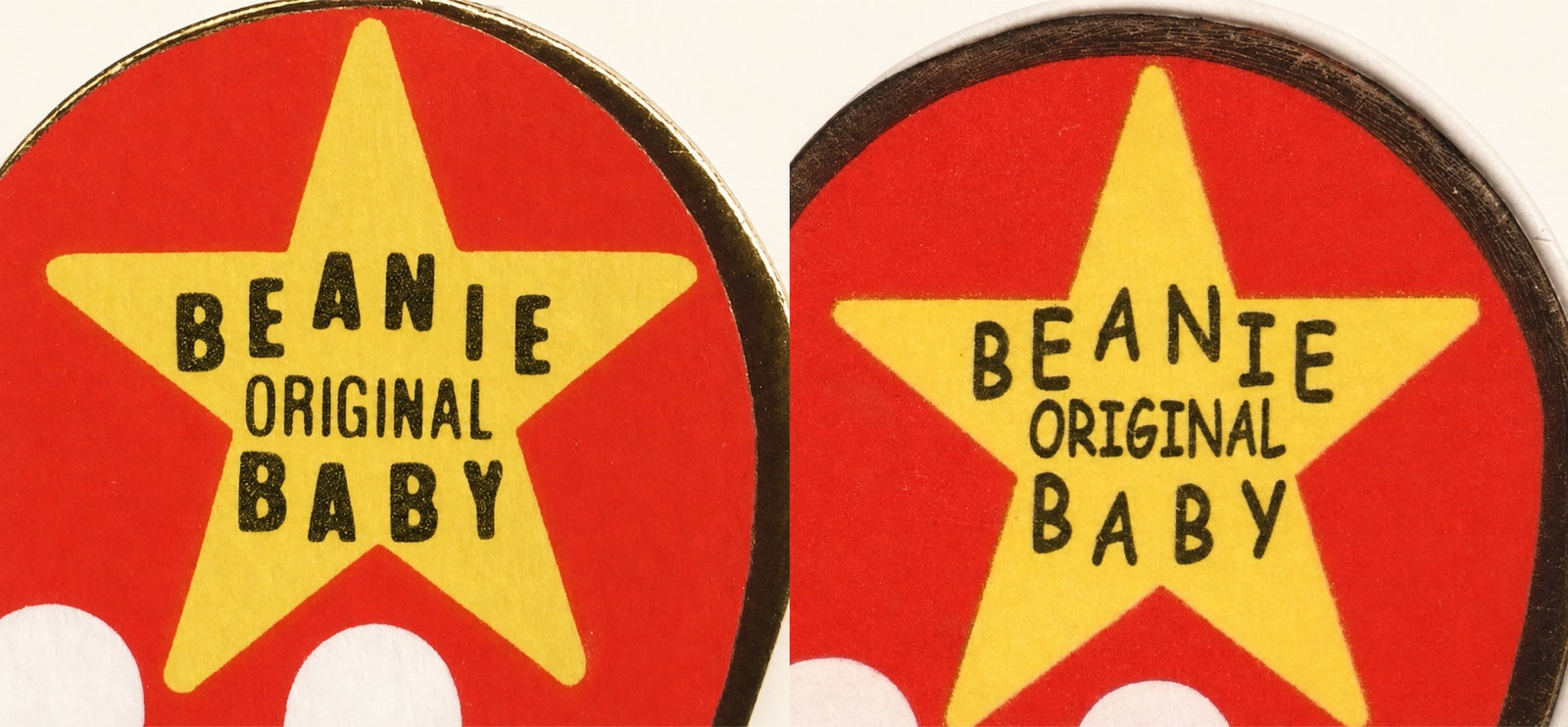
| 5th | Early 1998 to early 2000 | The star remains, with its lettering reset in a rounder, casual typeface. Style numbers disappear from the tag and the birthday changes format. |
| 6th and later | March 2000 onward | Designs keep evolving, reaching a 20th US generation on modern Ty products. The US sequence lists no 7th generation; the 7th appears only on UK and EU tags. |
A practical visual guide to swing tags
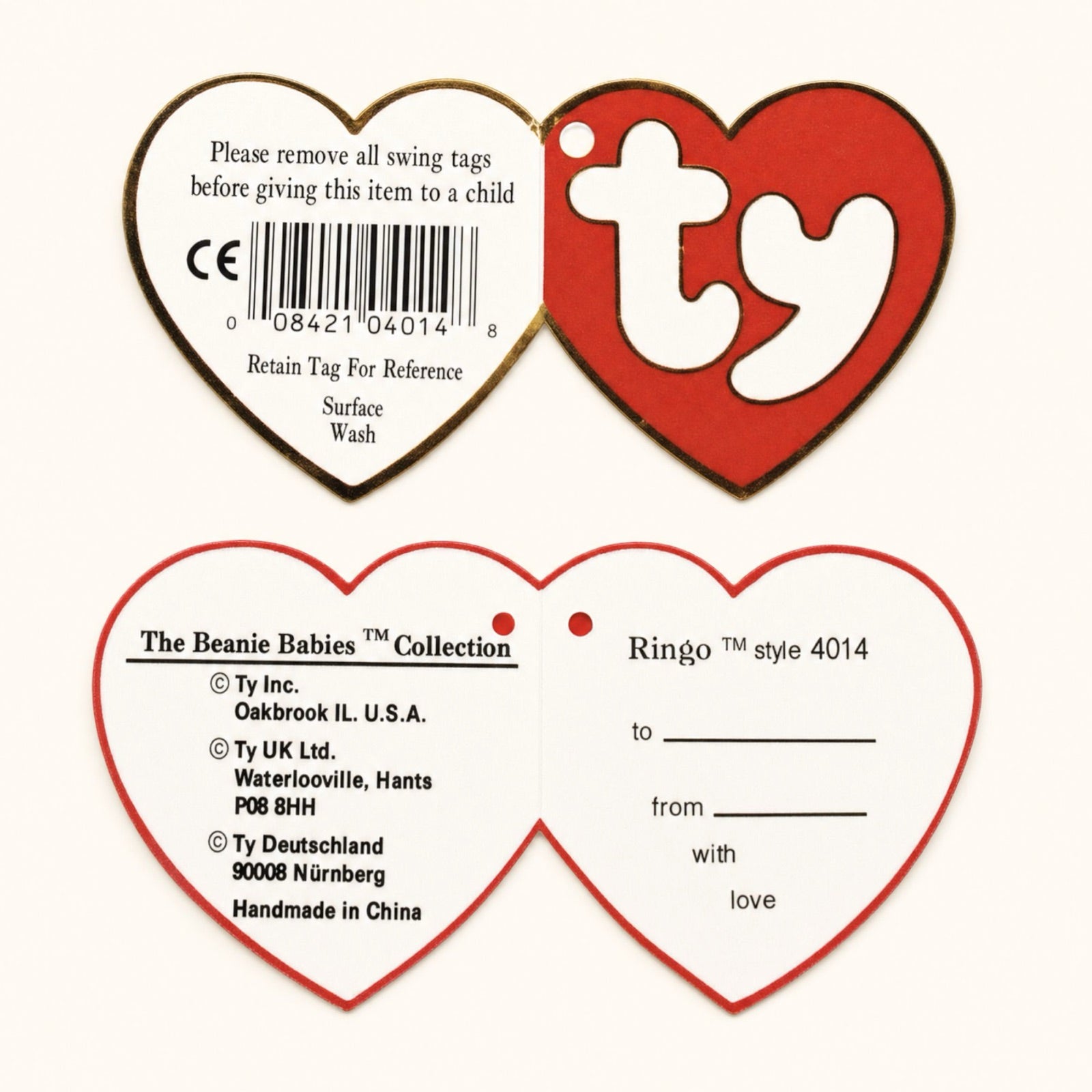
Early tags: plain red hearts (1993 to spring 1996)
The earliest swing tags have simpler red-and-white heart designs without the familiar yellow star. Small differences in wording and the shape of the Ty lettering separate the first three collector generations. These tags belong to early production and deserve careful comparison with a trusted visual reference.
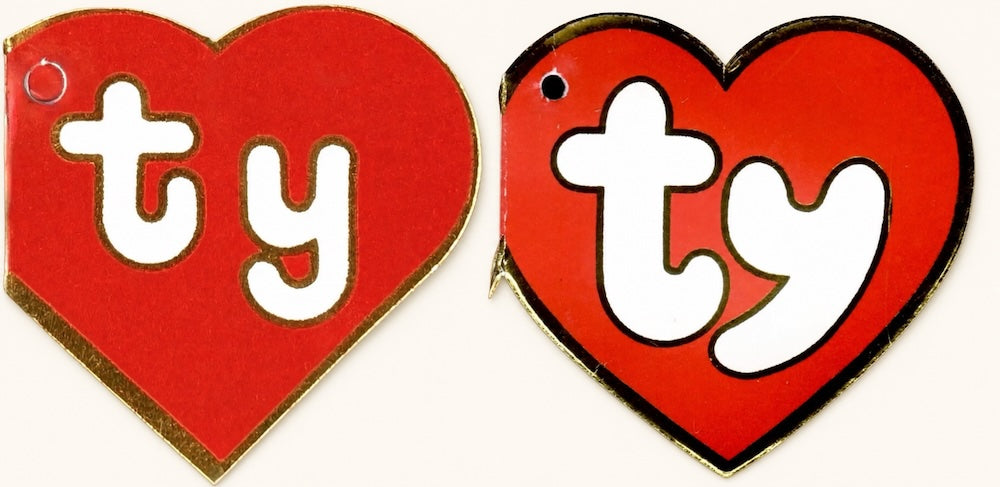
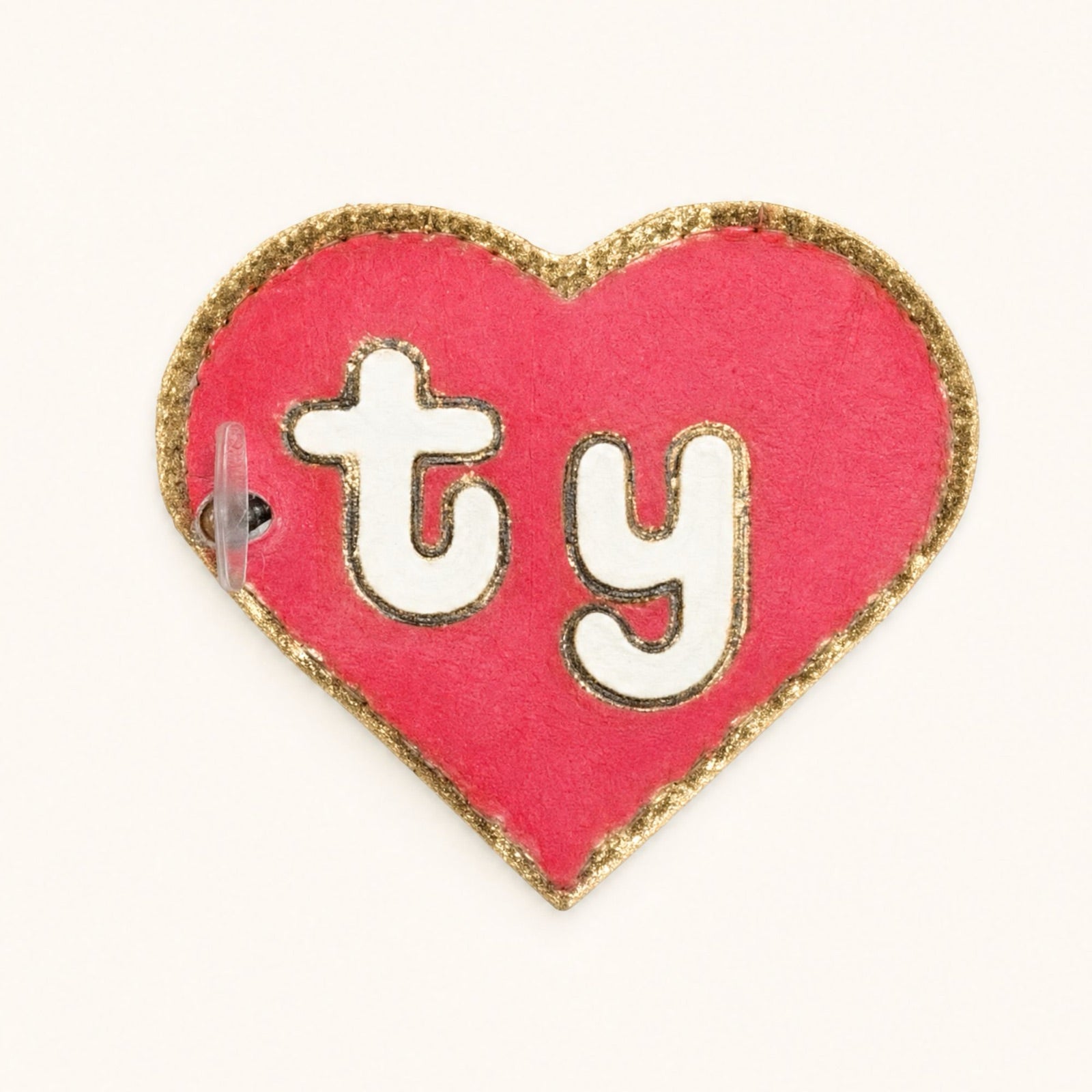
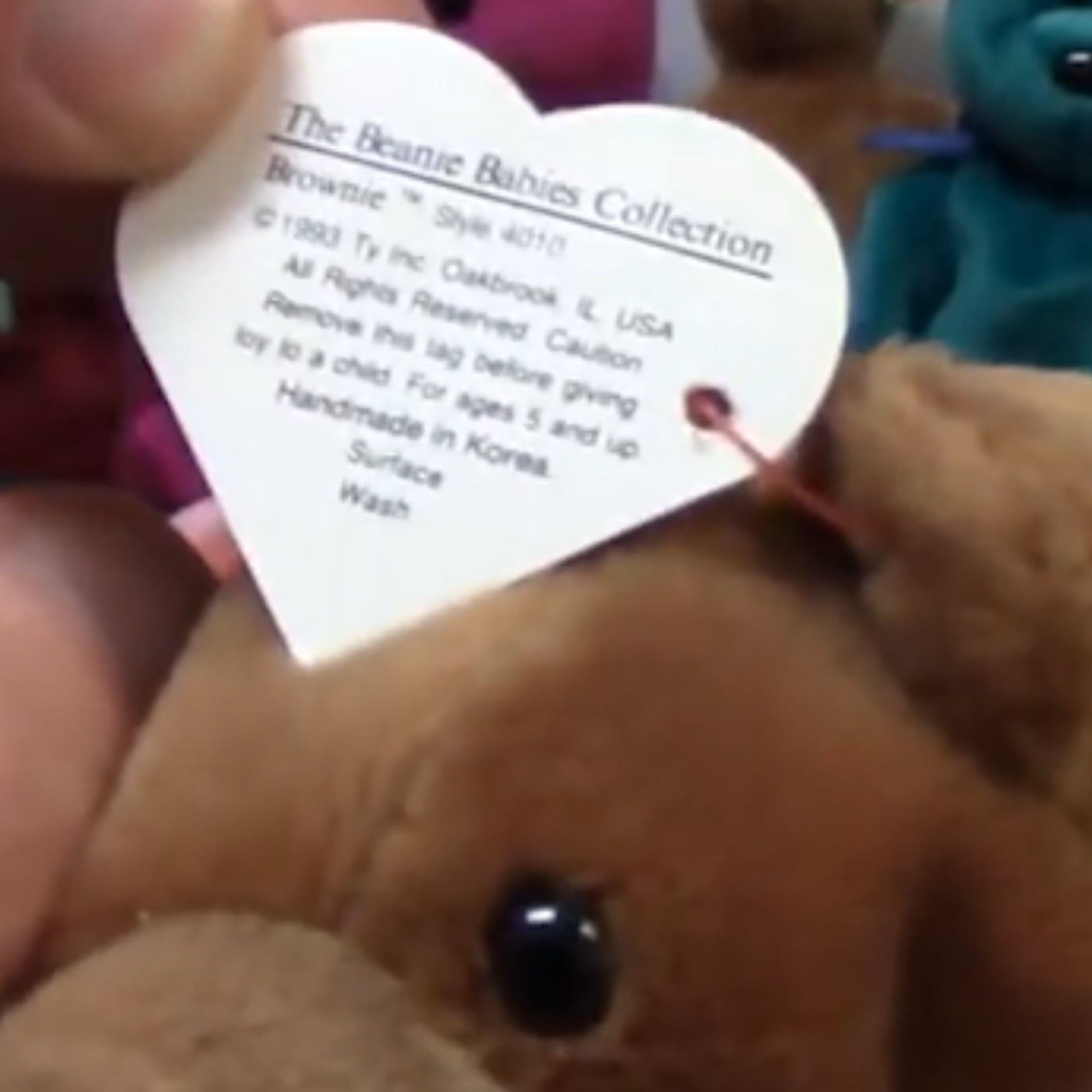
Photograph the front and back. If the tag opens, photograph the inside too. Include the name, style number and printed company details where present.
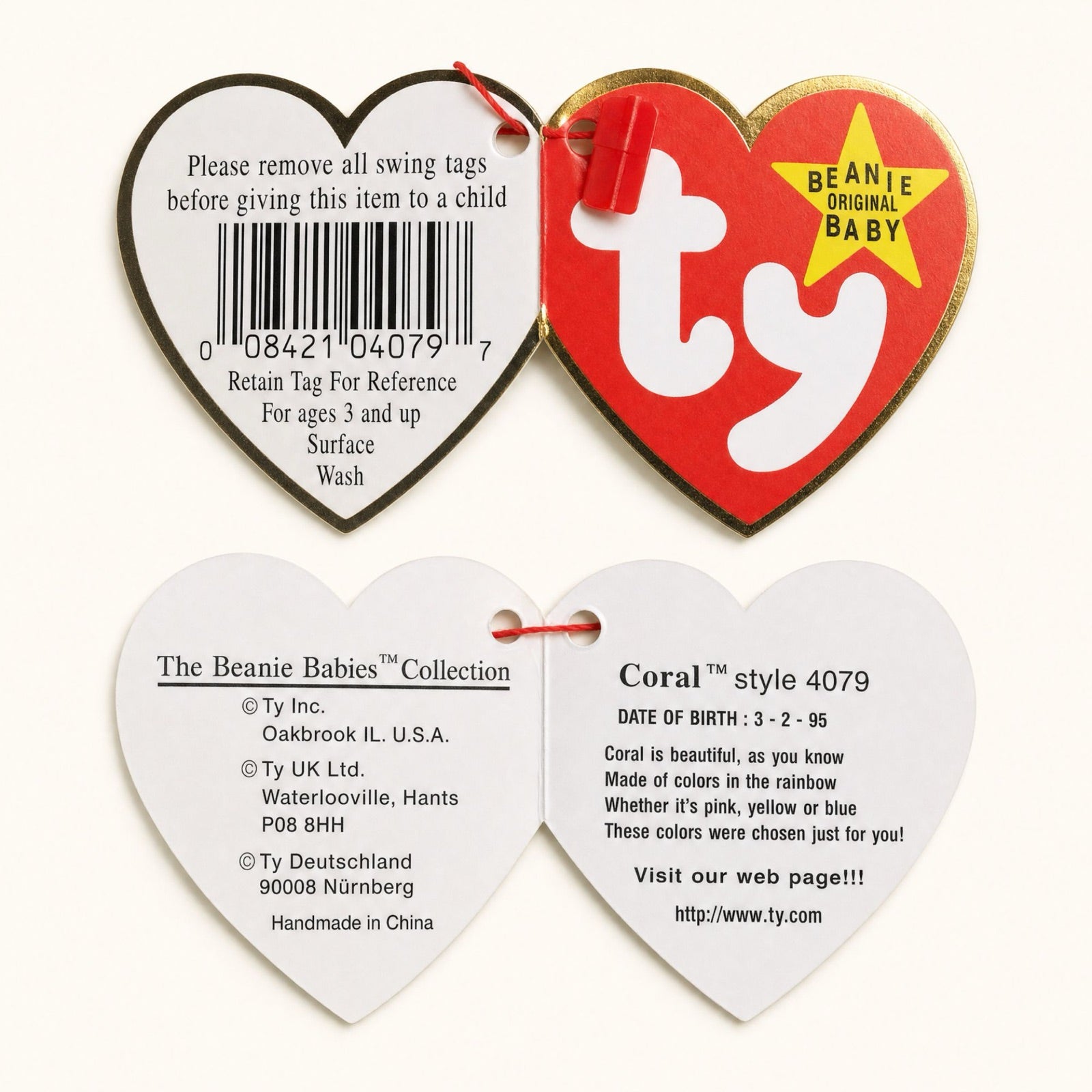
Fourth generation: the yellow star arrives (spring 1996 to late 1997)
The fourth generation introduced the yellow “Original Beanie Baby” star. Compare the star lettering with the inside text and other design details to distinguish it from later tags.
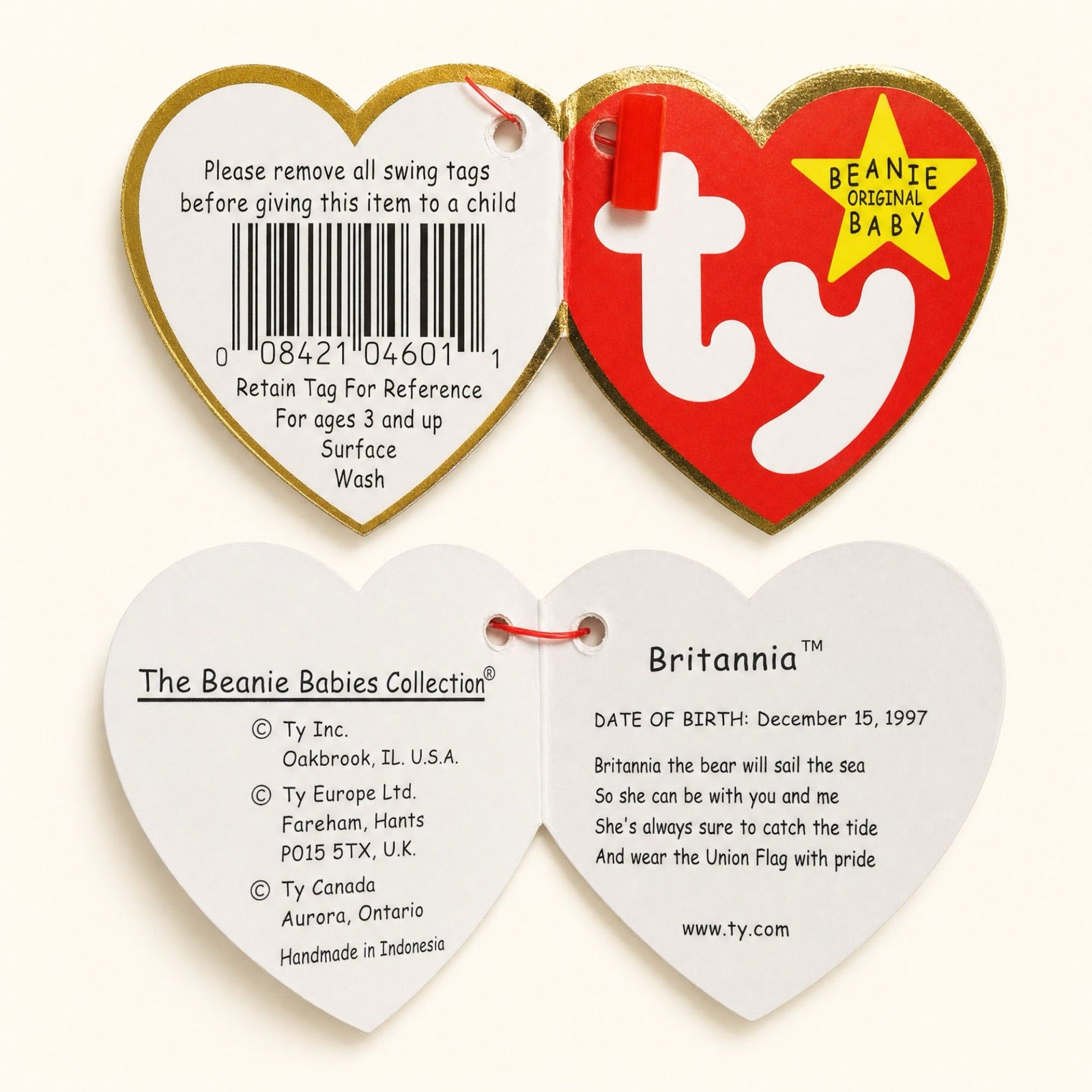
Later tags: changing text, symbols and security details (1998 onward)
Later swing tags added or changed trademark symbols, company information, poems, website references and other design details. Modern Ty products can use much later tag generations, so do not force every red heart into a 1990s checklist.
How to read a tush tag
Read each part of the label:
- Name: Later tush tags often name the character; early tags may not.
- Ty branding: Compare the exact logo style and lettering with the correct generation.
- Country: China, Korea and Indonesia appear on different authentic releases. Country alone does not establish rarity.
- Pellets: A label may say PVC or PE pellets. PVC was standard on many earlier Beanies and is not automatically an error.
- Copyright year: This may refer to a brand, design or character copyright. It is not necessarily the toy's birthday, release year or manufacturing year.
- Factory stamp: Some tags contain a number or stamp. Its presence or absence must be interpreted within the correct release, not treated as a universal value signal.
Tush tag generations at a glance
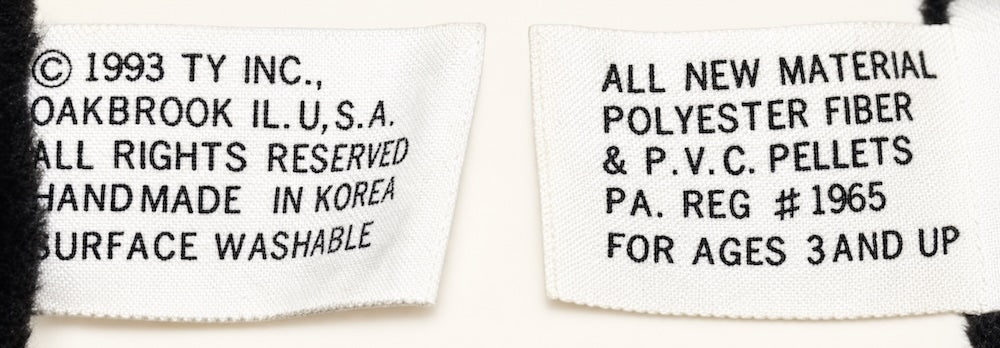
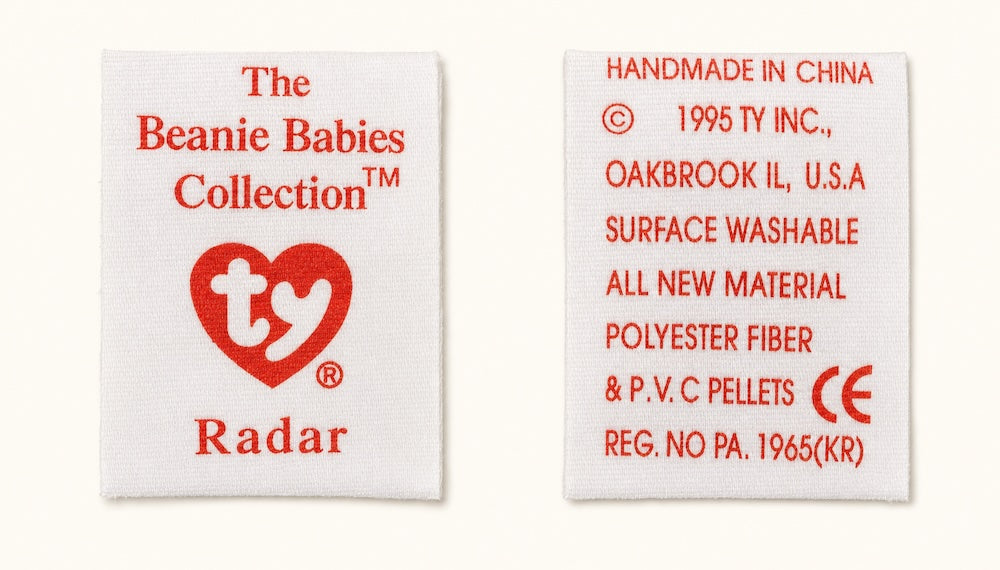
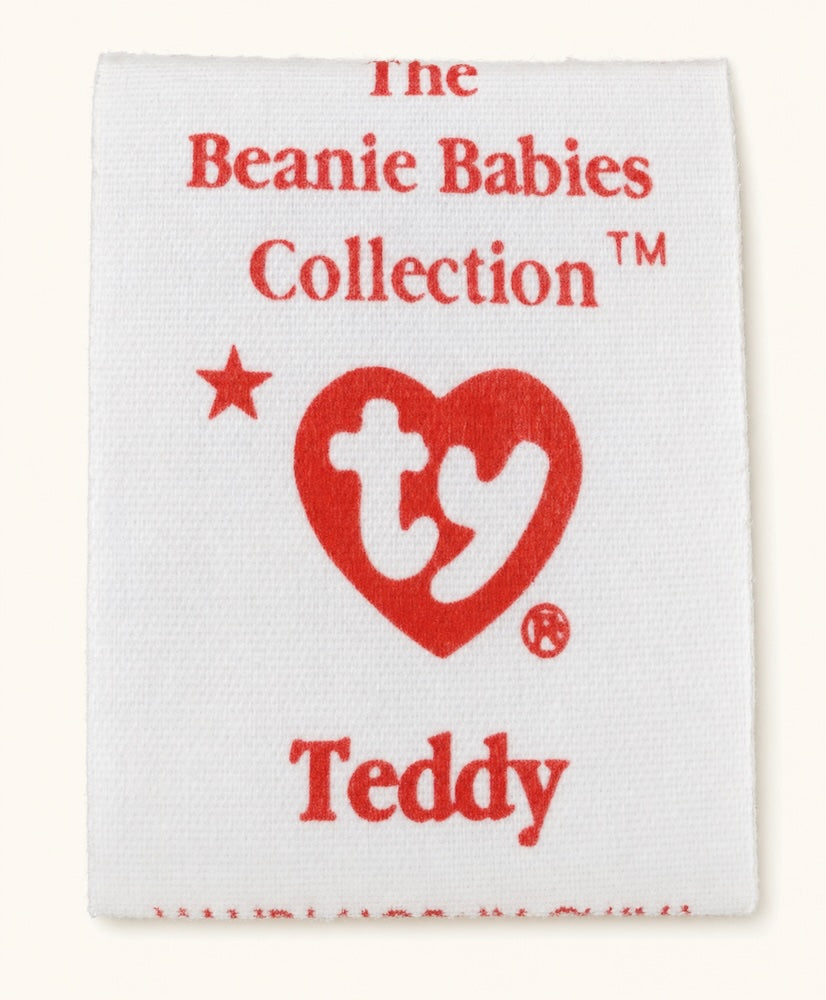
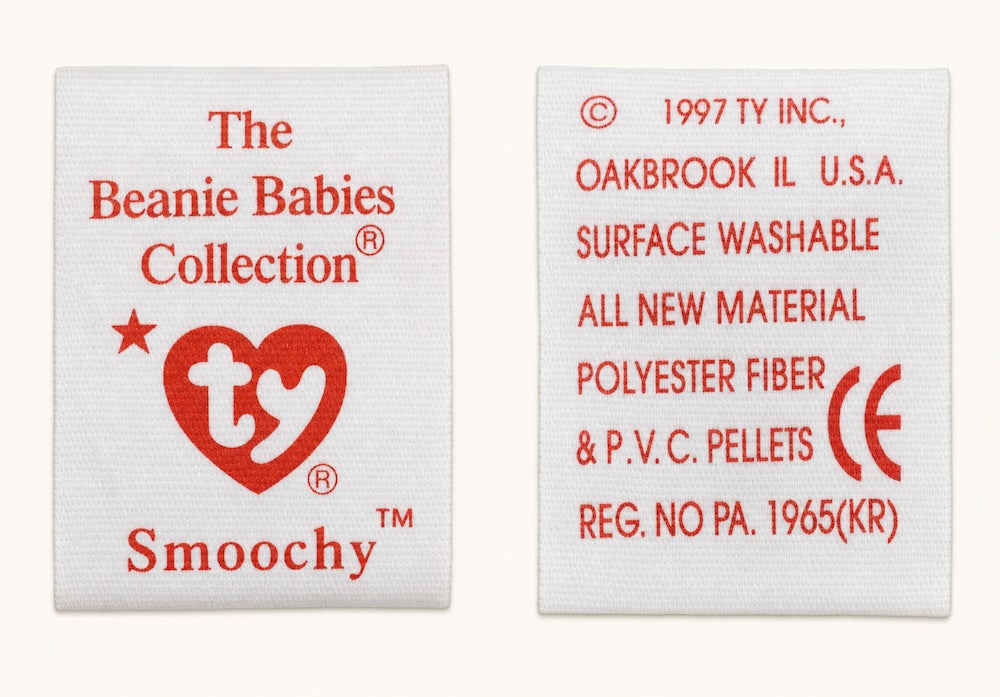
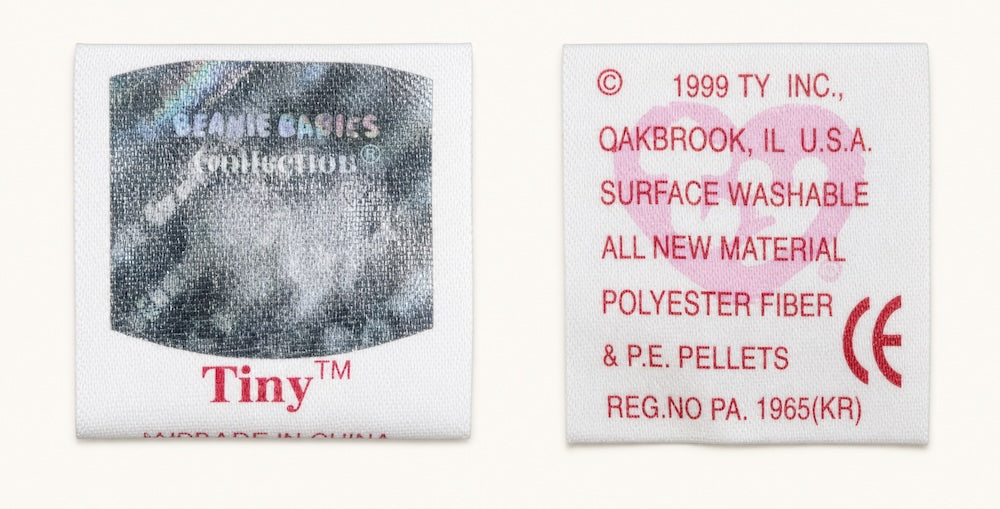
These copyright years describe the printing, rather than necessarily dating the toy’s manufacture. The final column lists documented swing-tag pairings. Use it as a starting point, then check the record for the specific character.
| Generation | Year printed | How to spot it | Seen with swing tags |
|---|---|---|---|
| 1st | 1993 or 1995 | Black printing only, with no red heart logo and no character name. Made in Korea or China. | 1st to 3rd |
| 2nd | 1993 or 1995 | Red printing and a small red heart logo appear. Still no character name, on a wider tag than the 1st. | 3rd |
| 3rd | 1993, 1995 or 1996 | "The Beanie Babies Collection" appears above the heart and the character's name below it. | 4th |
| 4th | 1993, 1995 or 1996 | A small red star is added beside the upper left of the Ty heart. On some tags the star is a sticker placed over the logo, which is authentic. | 4th |
| 5th | 1993, 1995 or 1996 | An ® symbol appears after "Beanie Babies" and a ™ after the character's name. Made in China or Indonesia. | 4th |
| 6th | 1993 to 1998 | The ® moves to follow "The Beanie Babies Collection". Tags may read P.V.C. or P.E. pellets, carry a watermark, and some show a red oval Chinese factory stamp inside the loop. | 5th |
| 7th | 1999 | A metallic hologram replaces the red heart logo. The heart image inside the hologram is heat sensitive and fades for a moment under a fingertip. | 5th |
Later products have additional tush-tag generations. This table focuses on the classic period covered by the guide.
Why swing and tush tag generations may not match
Swing tags and tush tags have separate generation systems. An authentic Beanie can therefore have, for example, one generation of swing tag paired with a differently numbered generation of tush tag. The correct question is whether the pairing is documented for that character and production period.
Never “correct” a pairing by replacing a tag. A detached tag cannot prove it originally belonged to a particular plush, and an assembled tag combination is less trustworthy than an intact original.
Tags on Teenie Beanie Babies
McDonald's Teenie Beanies are miniature promotional toys, not merely small versions of retail Beanies. Their packaging, sewn labels and promotion records should be evaluated separately from regular Beanie Baby tag generations. A Teenie sealed in its correctly printed McDonald's bag or presentation card has different identification evidence than a full-size retail Beanie with a heart tag.
Compare Teenie Beanies and regular Beanie Babies
See the complete 1997–2000 Teenie Beanie guide
Does tag condition affect value?
Yes, but not by a universal percentage. A clean, firmly attached swing tag without writing or severe creasing is generally more desirable than a damaged one. A protective cover can prevent new wear, but it does not restore an already damaged tag or authenticate the toy.
Evaluate these separately:
- Plush condition
- Swing-tag condition
- Tush-tag condition
- Original packaging or special presentation
- Exact character, generation and variation
The Beanie Baby Market Tracker provides sale records to investigate once you have a likely identification. Compare the same version and tag condition, and check whether a displayed sale amount includes an undisclosed offer.
Photographs to take for identification
For a useful identification request, take:
- Full front view
- Full back view
- Swing-tag front and interior
- Swing-tag back
- Both sides of the tush tag
Add close-ups of distinctive stitching, fabric, eyes or accessories. Keep the images unfiltered and make the tag print large enough to read.
Frequently asked questions
Is a Beanie Baby without a yellow star rare?
Not automatically. The star appeared with a particular swing-tag generation. Identity, documented production, condition and actual buyer demand still matter.
Do PVC pellets make a Beanie valuable?
Not by themselves. PVC was normal on many earlier releases. A pellet difference matters only when it helps distinguish a documented, scarcer version of a specific character.
Why is the copyright year different from the birthday?
They describe different things. The tush-tag year is not necessarily the year the physical toy was manufactured.
Can a tag prove authenticity?
A correct tag is useful evidence, but sophisticated counterfeits can copy tags. High-value candidates should be assessed as a complete object: tag printing, fabric, stitching, proportions, eyes, pellets and provenance.